At AllSkills Education, we're always looking for fresh ways to talk about money, and our latest project, 'Women, Money & Place', has been an eye-opener. It's a workshop series designed to tackle those cultural barriers that often make it hard for women to openly discuss their finances.
Looking Back a Century
To kick things off, we took a journey back in time. Ireland's 1926 census, which was released in early 2026, offers a fantastic glimpse into our past. For the first time, it included employment and occupation details for both men and women, painting a clearer picture of life shortly after the Irish State was formed. Those beautifully written household records, signed by the head of the house, hold so many stories.
Ireland's history with women and money hasn't always been straightforward. After gaining independence, the new state put significant restrictions on women, who were forced to leave state employment upon marriage from the late 1920s right up until the 1970s. This 'marriage bar' meant many women lost their independent income and pension accruals if they chose to have a family. It was only lifted some 53 years ago when Ireland joined the EEC.
Unpacking the Silence
Today, you often hear questions like, 'Why don't women talk about money?' or 'Why aren't women investing?' These questions sometimes make it sound like a failing on women's part. But they often miss the big picture – the structural barriers our mothers and grandmothers faced, and indeed, some that are still around today. Things like the lack of affordable childcare, the pressure of caring responsibilities, and a societal expectation for women to just 'get on with it' without complaining. This message of 'not talking about it' can get passed down through generations, meaning we miss out on valuable insights from our elders.
Our 'Women, Money & Place' workshops aim to challenge this cultural silence head-on.
Arklow's Stories
Our pilot workshops were based in Arklow, a fishing town based in County Wicklow on Ireland's east coast. We prepared for the workshops by digitsing and geolocating local 1926 census records. The 1926 census was the first since the formation of the present-day Irish State, as Ireland emerged from its colonial past. It was the first which households could legally complete in the Irish language, and also for the first time, occupation and employers were recorded. With this rich data, we created themed maps to get insights on male and female employment and potential access to income.
For instance, we noticed a sharp drop in working-age men in Arklow on census night, April 18th, 1926. Local historians, including a wonderful 94-year-old expert, helped us understand why – the men were often away at sea for months. This meant the women of Arklow were often the ones managing household finances, collecting wages, paying bills, and keeping their families afloat.
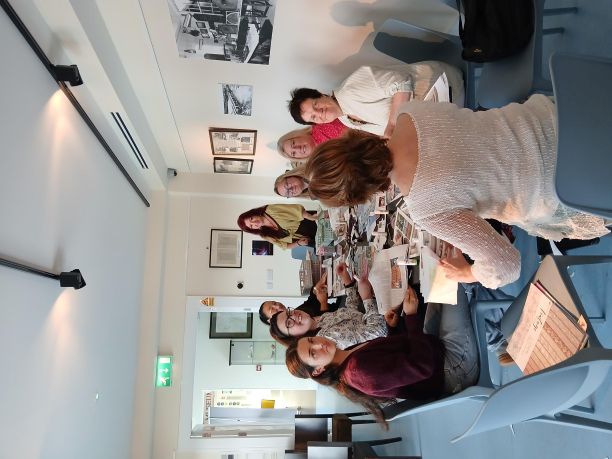
Over four workshops, participants - ranging from 17 to 93 years old - reviewed these local census details. Many searched for their own grandmothers, sharing powerful stories of strong women who might not have been publicly visible but quietly made a huge impact. These were women who ensured their daughters got a good education and worked together in the community.
Local artist Yvonne Power joined us, bringing images of the area and past eras to life. Participants then created personal collages, sharing their artwork and the memories it stirred. It was incredible to hear stories of mothers and grandmothers bubble to the surface, with many having 'aha' moments about their own mothers' lives. There was also a shared regret about not asking more questions when their parents were still around to answer them.
Community and Connections
We held these workshops in an art gallery and a heritage museum, thanks to sponsorship from SSE Renewables and Heritage Credit Union, and support from local artistic and historical communities. We even did a heritage walk with historian Pat Power, connecting past and present stories of women's economic lives.
It’s been a tremendous resource for breaking down those cultural barriers around talking about money. We're excited to continue beyond the pilot, with our next workshops planned for Dublin 8. You can keep up with our progress on https://womenmoneyplace.ie. These workshops truly show how we can bridge 'difficult' subjects and open up conversations that challenge our deeply held beliefs.